Alternative data market trends in 2026: Market growth, AI adoption and dataset usage
Investment managers spent approximately $2.8bn on alternative data in 2025, according to Neudata’s latest market analysis.
Feb 24, 2026
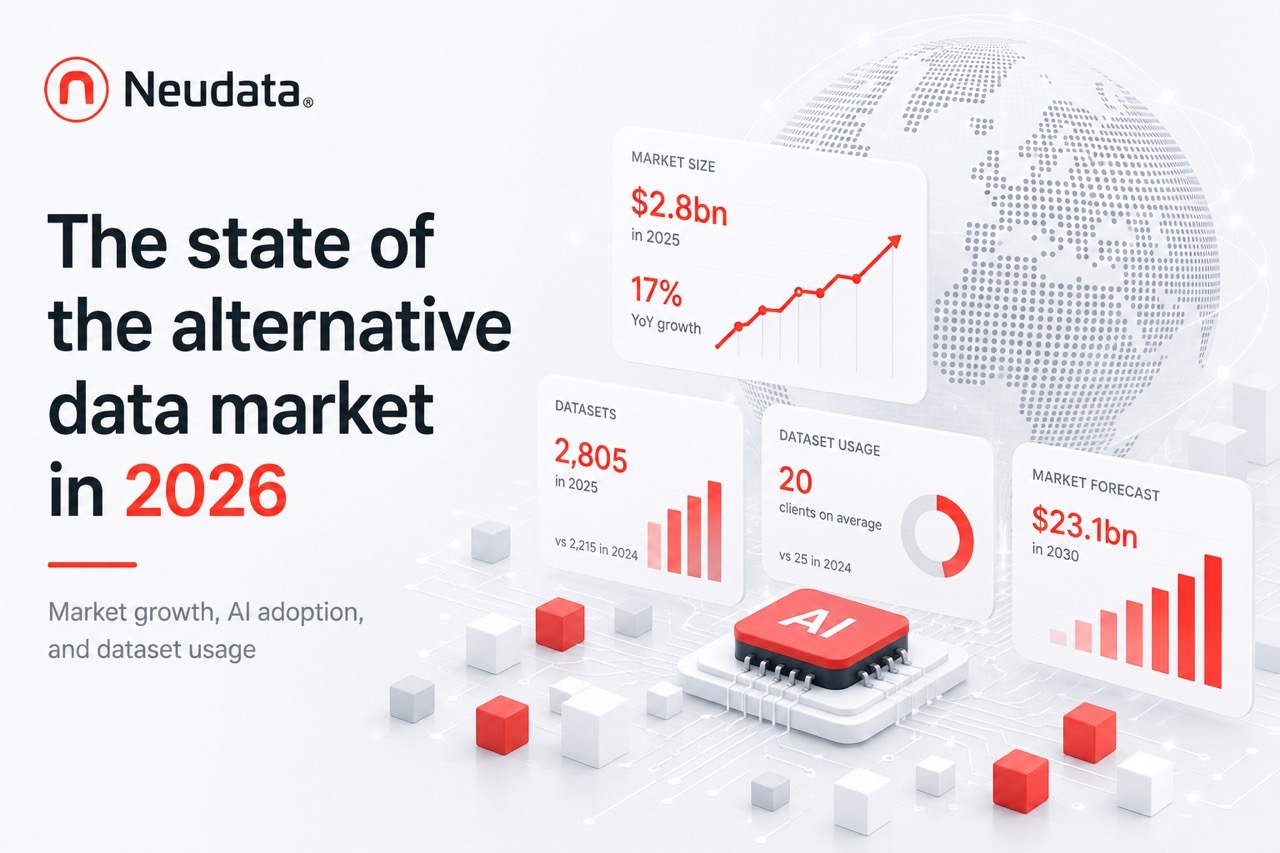
The investment market grew 17% year-on-year, while firms increasingly used AI for productivity and workflow efficiency rather than investment optimisation. At the same time, the average dataset appears to be used by fewer investment firms than in the prior year, challenging the narrative that alternative data is becoming universally “crowded”.
Neudata’s report, ‘The state of the alternative data market in 2026’, analyses spending trends across dataset types, geographies and use cases using proprietary platform data from 2,805 datasets listed on the Neudata Scout platform, alongside buyer survey insights.
Key Insights From Neudata’s 2026 Alternative Data Market Report
- Alternative data spending reached approximately $2.8bn in 2025, growing 17% YoY.
- AI adoption across investment firms accelerated in 2025, but firms are primarily using AI for productivity and workflow efficiency rather than investment optimisation.
- The average alternative dataset is now used by approximately 20 investment clients, down from 25 in 2024, suggesting dataset usage is becoming more fragmented rather than increasingly crowded.
- Web-scraped and transactional datasets remain the largest categories by spend.
- Neudata estimates the market could reach approximately $23.1bn by 2030 if current growth trends persist.
How big is the alternative data market in 2025?
The alternative data market reached approximately $2.8bn in 2025, growing 17% year-on-year. Growth has been driven primarily by the increasing number of datasets available to investors, with Neudata’s analysis covering 2,805 datasets in 2025, up from 2,215 in 2024.
The report also highlights continued confidence in alternative data budgets among investment firms:
- 57% of investment firms expect their alternative data budgets to increase
- 15% expect spending to grow by more than 15%
This suggests that alternative data remains a structurally important and expanding part of the investment data ecosystem.
How are investment firms using AI in alternative data?
One of the report’s most notable findings is that the rapid rise of AI throughout 2025 did not translate into an above-expected increase in overall buyer spending on alternative data vendors. Instead, firms are primarily using AI and LLMs to improve internal productivity and workflow efficiency.
According to Neudata’s buyer survey:
- 66% of respondents said their firms are using AI/LLMs mainly for productivity and workflow efficiency.
- 31% said they are using AI to optimise investment or trading strategies.
As Daryl Smith, Head of Research at Neudata, explains: “Some providers are benefiting from AI‑led differentiation, and demand is growing for datasets that help investors quantify the AI boom itself – but overall, AI is changing how data is consumed, not how much buyers are spending with vendors.”
Is alternative data becoming too crowded to generate alpha?
The data shows that alternative datasets are not becoming universally crowded – in fact, the opposite may be true. Neudata estimates that the average alternative dataset is now used by approximately 20 investment clients, down from 25 in 2024. This indicates that usage is becoming more fragmented as the market expands.
According to Daryl Smith: “The fact that usage is fragmenting suggests the market is broadening – not converging on the same handful of datasets. That’s a healthier dynamic than the idea that everything becomes instantly crowded, because it implies buyers are still finding differentiated sources of edge.”
The report suggests this trend may challenge one of the most common assumptions in the industry: that widespread adoption automatically erodes the value of alternative data over time.
Which types of alternative data attract the most spending?
Neudata’s analysis found that web-scraped and transactional datasets continue to account for the largest share of alternative data spending.
Transactional data remains particularly important due to its direct connection to consumer behaviour, revenue trends and real-time business activity.
The report also highlights a growing demand for globally applicable datasets. In 2025, 42% of newly launched datasets had global applicability, up from 29% in 2024.
This reflects increasing demand from multi-region investment strategies, global macro funds and internationally diversified asset managers.
What is the alternative data market forecast through 2030?
Neudata’s analysis suggests that the long-term growth trajectory of the alternative data market remains strong. If current trends persist, the market could reach approximately $23.1bn by 2030, supported by:
- continued dataset expansion
- broader institutional adoption
- increasing integration of data into investment workflows
This blog highlights selected findings from Neudata’s report, ‘The state of the alternative data market in 2026.’ The full report explores:
- AI adoption patterns
- dataset-level revenue benchmarks
- buyer demand trends
- market segmentation
- regional spending shifts
- regulation and compliance risks
- long-term market growth scenarios
Download the full report here.

Truth API: What we know about Truth Social's paid data feed
Aug 13, 2026